

Important Update: Changes to CQI and SCA Programs
The Q Grader course has been acquired by SCA. Read more about the change and how we are trying to adapt, here.
We want to address the recent changes announced by the Specialty Coffee Association (SCA) and Coffee Quality Institute (CQI) on Thursday and over the weekend of April 25, 2025.
While we can’t speak to the motivations or methods behind these changes—or how they were communicated—we recognize that the rollout has caused confusion and frustration. Like many of you, we feel let down, angry, and disappointed by how this transition was handled. Our goal now is to provide you with clear, transparent information so you can make the best decision for your path forward.
What We Know (So Far)
Effective October 1st, 2025:
CQI will no longer own or administer the Quality Evaluation (QE) courses.
Ownership and delivery of these programs, including the Q Grader Program, will shift entirely to the SCA.
The SCA plans to launch a new version of the Q Grader Program, currently being referred to by the SCA as “Evolved Q,” starting in October.
It is still unclear whether other QE courses will continue to be offered or be discontinued.
Below is how each current course offering will be affected:
Course-by-Course Breakdown
• Understanding Tastes and Flavors
This is not a certificate course. All content remains relevant and valuable regardless of organizational changes.
• Intro to CQI Cupping
This course teaches the 2004 CQI Cupping Form, which will no longer be used by CQI, SCA, or in the Evolved Q.
However, if you're aiming to complete your Q Grader certification before the October deadline, this class remains a helpful preparation tool.
• Q Arabica/Robusta Grader Certification
CQI will continue issuing Q Grader licenses through September 2025.
If you want to learn and test using the 2004 Cupping Form—used for the past 20 years and still relevant in much of the industry—this course remains highly valuable.
Graduates will earn a CQI Q Grader License valid for three years.
Completion will also make you eligible for the “fast track” to SCA Q Certificate by taking the 2-day CVA for Cuppers course before the end of 2025.
• Q Grader Retakes
CQI and SCA will no longer offer retake extensions after September.
We are now scheduling additional Retake Days immediately following each Q Course through September.
We encourage all retakers to join us—we’ll do everything possible to accommodate your needs.
If you attend a Q Course with us, please allow flexibility in your return travel plans in case an extra cupping day is needed.
• Q Arabica/Robusta Calibration
Licensed Q Graders who calibrate before October 1st will retain a valid CQI license for three years from their calibration date.
Once that license expires, you’ll need to complete the full, new 6-day SCA Q course to maintain certification.
Fast Track to “Evolved Q”
We are offering multiple CVA for Cuppers courses throughout 2025—including online options—for current Q Graders who wish to transition into the new SCA framework.
Currently Scheduled CVA Courses:
May 24-May 25 @ Anthem, Kansas City
June 12–13 @ Royal NY, South Plainfield, NJ
July in Thailand
August 12–13 @ Royal NY, South Plainfield, NJ
September 5-6 @ Balzac Bros, Charleston, SC
We are also looking at a possible online event. Please email if interested.
If your organization has several Q Graders and would like to host a private, on-site course, we’re happy to travel to you. Please contact t@colabops.com to arrange details.
We're Here to Support You
We understand these changes may feel overwhelming. Please know that our team is committed to helping you navigate this transition and continue your coffee education with confidence.
If you have questions or need clarification, don’t hesitate to reach out.
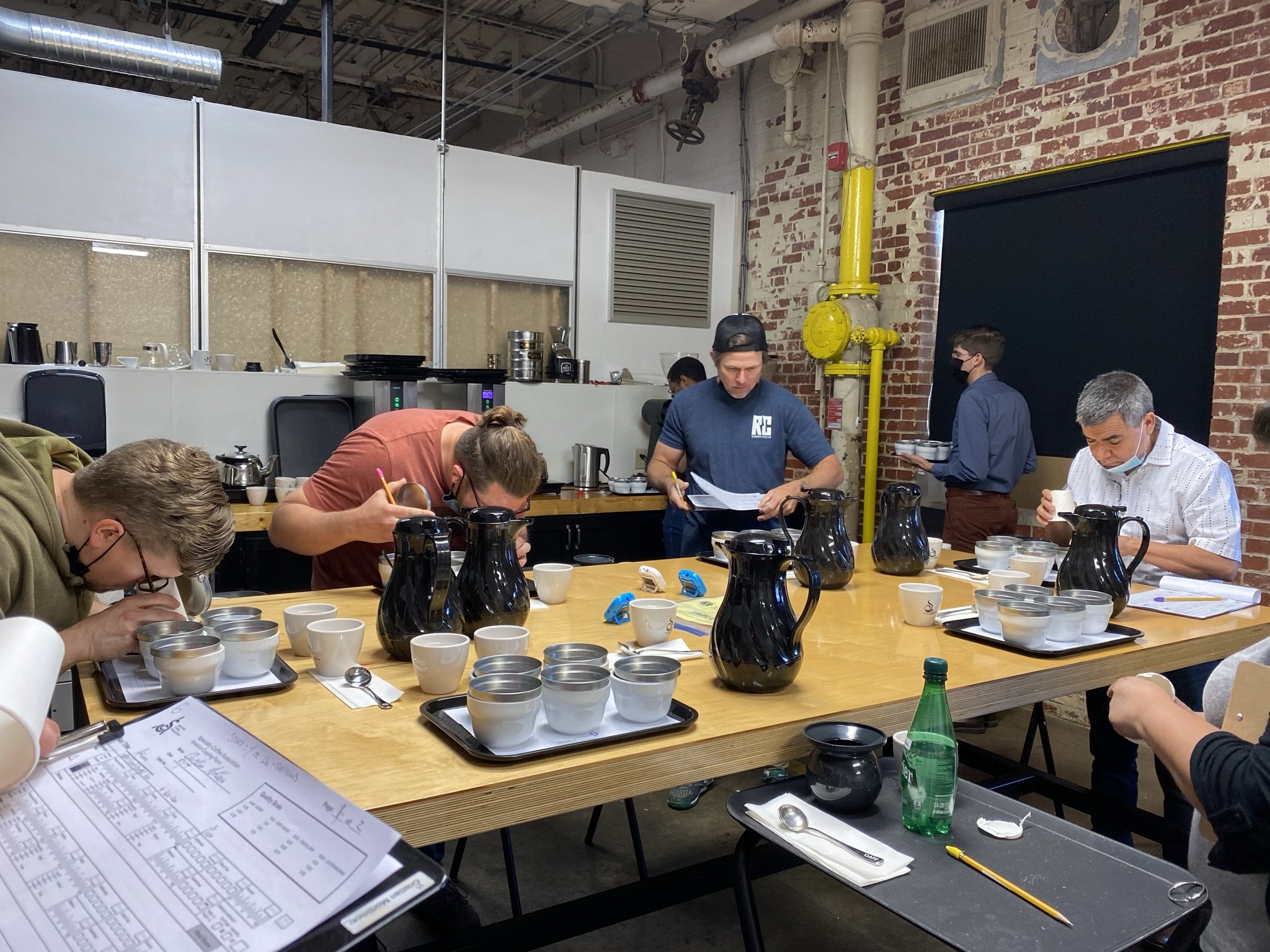
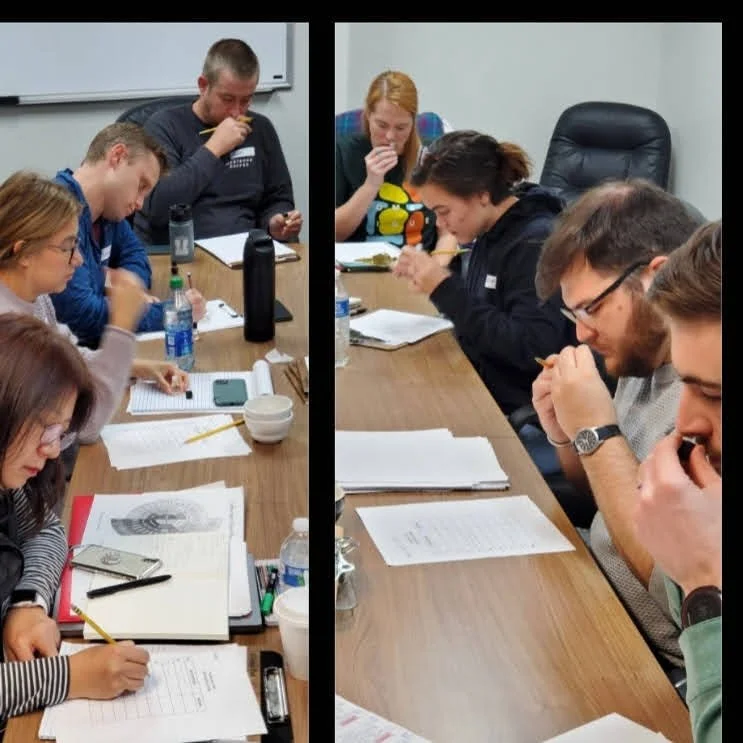
Coffee Professionals in a Q Course
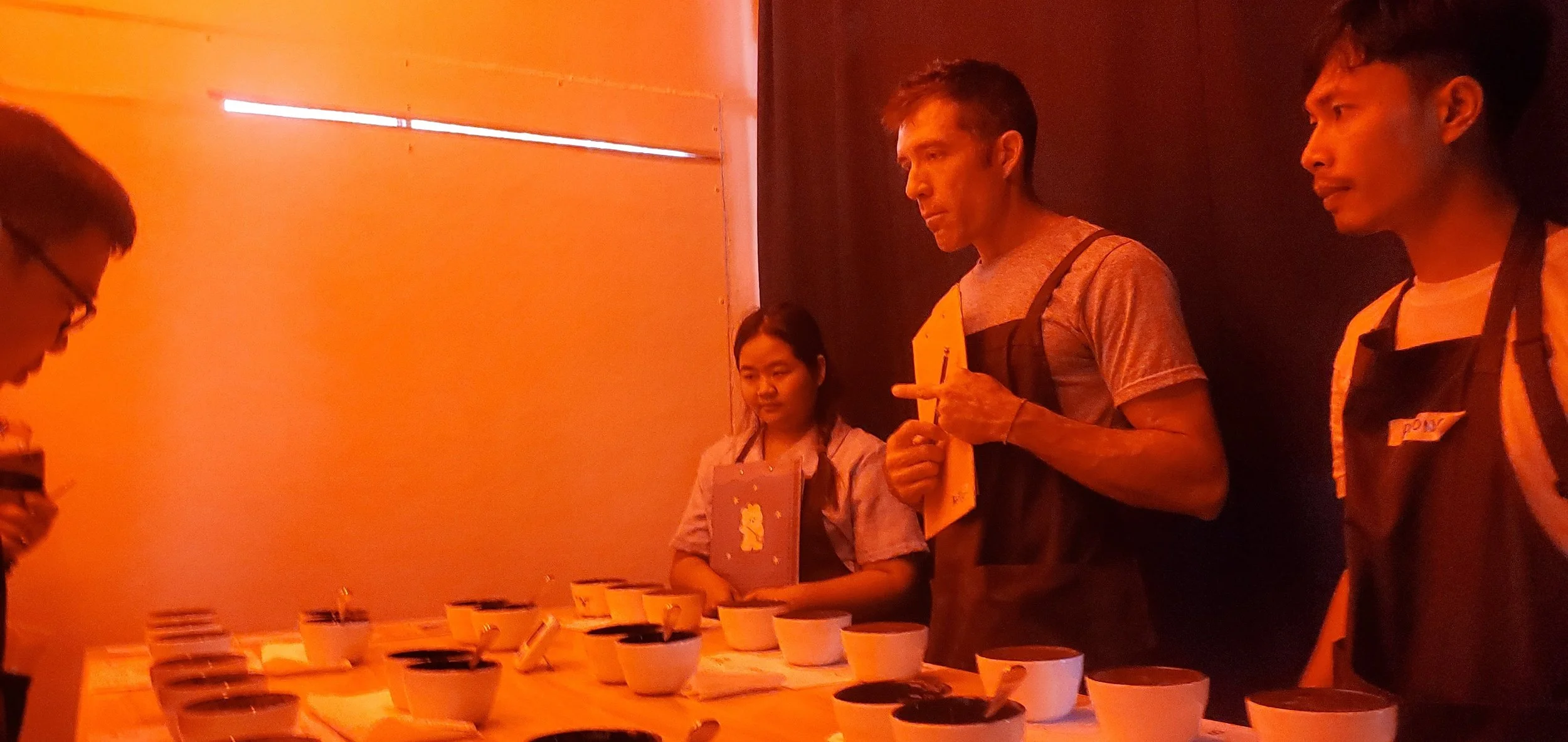
Coffee Professionals in Laos in the Q Course

Understanding Tastes and Flavors
Understanding Tastes and Flavors is one of the most excellent entry level one day sensory classes for people completely new to coffee or people who have yet to work in the sensory analysis or quality evaluation realm of coffee.
Understanding Tastes and Flavors is one of the most excellent entry level one day sensory classes for people completely new to coffee or people who have yet to work in the sensory analysis or quality evaluation realm of coffee.
People currently employed in coffee like Roasters, Machine Operators, Salespeople, Baristas, and Entrepreneurs looking to start their own coffee business all find benefit in this class.
Many individuals we’ve worked with over the years tell me they don’t understand how to describe coffee, they say they are bad at it, or that their weakest area is sensory. What we find is, those people aren’t bad at analyzing the tastes and flavors in the coffee, they just aren't comfortable or used to it.
Our culture doesn’t spend much time thinking about or describing the things we consume. If we discuss something food or beverage related, it’s usually in terms of good or bad – "I like it, I don’t like it”. Or, we might say a dish is too much or too little of something. It’s too salty, it’s not seasoned enough, it’s too spicy.
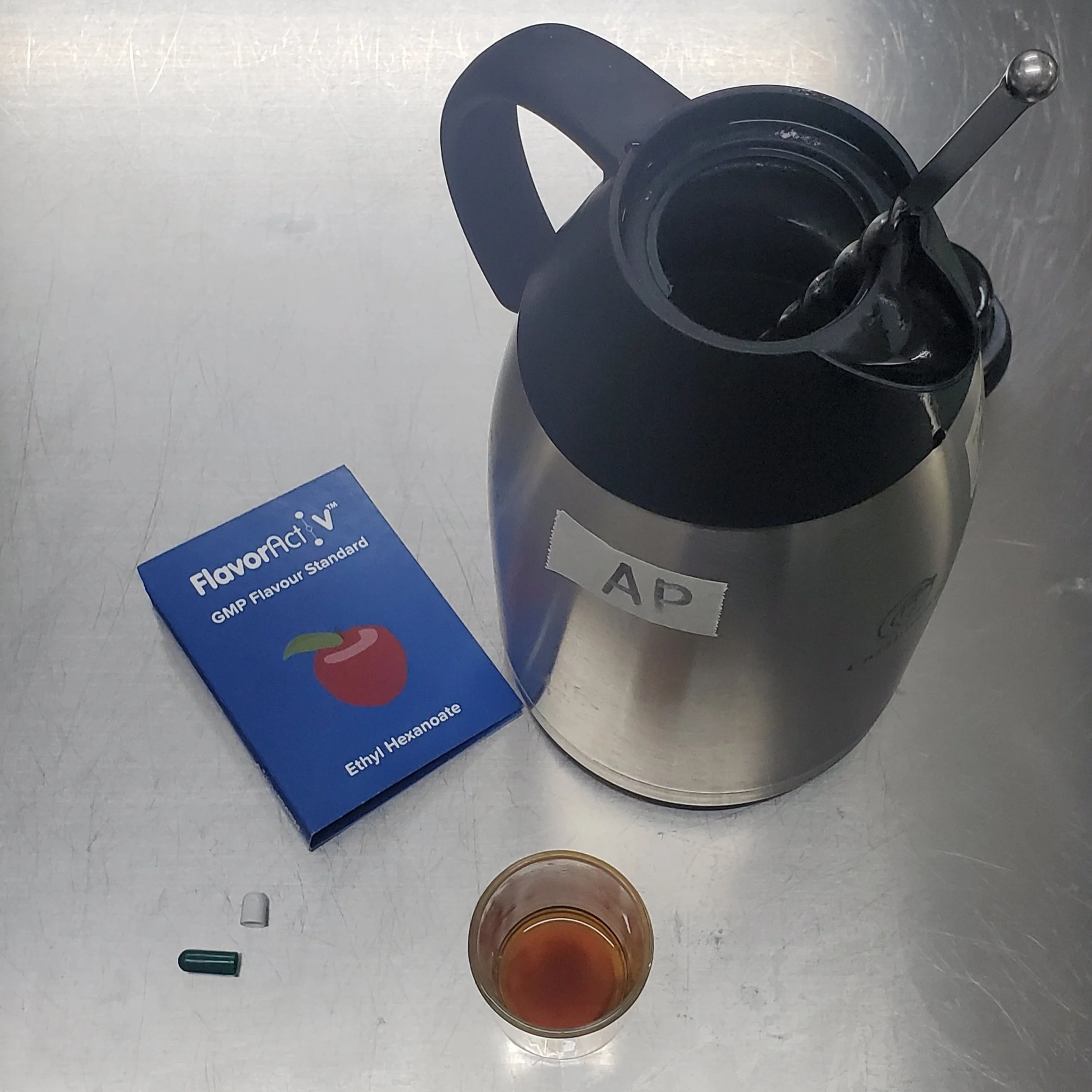
flavoractiv is used to spike a plain cold brew coffee with single flavors to aid in identification and recall.
When asked what additional classes individuals are interested in, Sensory is the number one answer. Another request we get all the time is for Q PREP class. Those of you who’ve asked will be happy to know that THIS IS A Q PREP CLASS! After completing this class, a person will have an increased understanding in completing the cupping form, specifically Flavor, Aftertaste, and Body
This class also isolates and explores our sense of taste – using solutions with individual tastes- sweet, sour, salty, and bitter with no associated smell, we can better understand these components of coffee. Usually when we eat or drink something sweet, it’s associated with the basic taste of sweet but also contains multiple aromatics and texture. For example, shortbread is sweet, but it is also buttery, caramelly, and crunchy. Or grapefruit has grapefruit and floral aromatics, but it also has sharp acidity and bitterness which can cause confusion between the two tastes. Taking the time to experience each taste on its own helps to clarify the tastes for the individual.
In addition to clarifying tastes, this class also gives individuals a chance to analyze the same coffee multiple times but each time with one flavor difference, for example an added strawberry flavor or a medicinal note. Doing this allows a person to focus on a single flavor and describe it rather than having to view the entire coffee in all its complexity and pick out all the flavor notes.
And finally, this class offers a chance to isolate some specific body terms like thick, syrupy, astringent, and spicy.
The first time we taught this course was during an ACDI/VOCA PhilCAFE project in the Philippines. We were chosen by the Coffee Quality Institute to deliver the course with Cherry Cruz and her excellent team at The Barista and Coffee Academy of Asia. This was a relatively new course offering by CQI during this time. We were excited to deliver this course and happy to see how clearly and simply the concepts of taste and flavor were broken down and received by the attendees.

The crew from this round of PhilCAFE training after tasting defects.
This is a great opportunity for coffee professionals who are interested in improving their palate with goals like increased confidence when describing coffee and improving cupping skills. We are looking forward to adding this to the offerings from CoLabOps at the Lab at Royal NY starting in May!